


What Causes Cat Anxiety? Experts Explain

- Not a substitute for professional veterinary help.
Anyone with anxiety is all too familiar with the icy grip of fear and constant stress, but humans aren’t the only animals this condition affects. Cats can also suffer from anxiety. And because cats aren’t able to tell us what they’re experiencing, it can be challenging to recognize the signs of anxiety and take steps to help them.
To gain more insight, we consulted veterinarians Dr. Justine McCarthy of Mt. Laurel Animal Hospital and Dr. Nathaniel Rakestraw with TelaVets.com.

In this guide, we’ll explain how to identify cat anxiety, what causes it, and how vets diagnose it. We’ll also share steps you can take to help your cat feel more comfortable and secure at home.
Signs of Cat Anxiety
Cat anxiety can range in severity. “Mild anxiety is often situational and intermittent,” says Dr. McCarthy. Affected cats may still eat, play, and interact normally most of the time. “At this stage, cats are usually still functioning well overall, but their tolerance for stress is lower than it should be,” adds Dr. Rakestraw.
Mild anxiety might show up as small behavior changes that are easy to miss.
Common signs of mild cat anxiety include:
Severe anxiety is more constant and intense, and it can start to interfere with a cat’s day-to-day life. “Cats with severe anxiety might struggle with everyday things like eating, resting, grooming, or using the litter box,” says Dr. McCarthy.
Common signs of severe cat anxiety include:
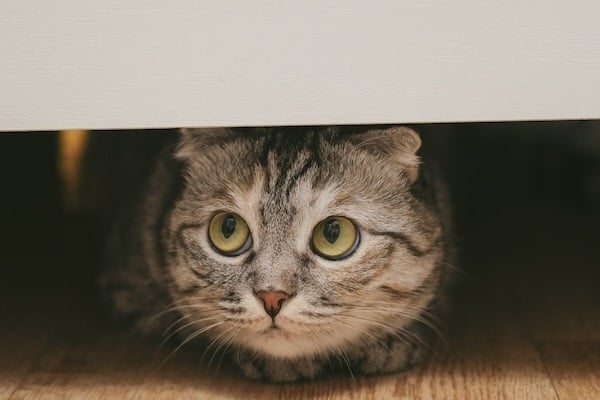
- Frequent or prolonged hiding
- Aggression toward people or other pets (hissing, swatting, biting)
- Persistent urination or defecation outside the litter box
- Significant appetite changes or weight loss
- Compulsive overgrooming to the point of hair loss or skin irritation
- Destructive scratching
- Excessive vocalization
- Trembling, pacing, or hypervigilance that does not resolve
- Self-injury or repetitive behaviors
- Escape attempts
- More pronounced changes in body language (fully dilated pupils, hair standing up, staring)
Valeriia Mitriakova via iStock
What Causes Cat Anxiety?
Typically, cat anxiety isn’t tied to a single cause. Instead, Dr. McCarthy says it often arises from a mix of medical issues, changes in the cat’s environment, social dynamics, and the cat’s individual personality. Here’s a breakdown of the most common factors.
Medical causes
If a cat suddenly starts exhibiting anxious behaviors, it’s crucial to rule out health issues first. “Pain, digestive problems, urinary tract issues, hormonal conditions like hyperthyroidism, and neurological problems can all show up as restlessness, irritability, hiding, or changes in litter box habits,” Dr. McCarthy explains.
Environmental changes
Cats are creatures of habit, and any change in their environment can trigger anxiety. Stress is a common response to changes in routine or work schedules, moving to a new home, or welcoming unfamiliar visitors.
Dr. McCarthy notes that even small disruptions—like rearranging furniture or using a new scent in the home—can cause feline stress.
Social stressors
Introducing new pets or people can also play a role. In fact, Dr. McCarthy says inter-cat conflict is one of the most common causes of chronic anxiety in cats. This tension usually arises from perceived competition over resources, such as food bowls and litter boxes.
While social stress may not always lead to fighting, Dr. McCarthy says it can manifest in more subtle ways, like avoidance, blocking behavior, or inappropriate elimination.
Lack of enrichment
Cats need both mental and physical stimulation to thrive. Without enough opportunities to play, climb, hunt, and engage in other natural behaviors, Dr. McCarthy says cats may develop anxiety-related issues like overgrooming or destructive habits.
Lack of socialization
A cat’s early experiences can contribute to anxiety. “Poor socialization as a kitten, early weaning, or limited exposure to normal household life can make some cats more prone to stress,” says Dr. McCarthy. To avoid anxiety in adulthood, kittens need plenty of positive social interactions and exposure to a variety of sights, sounds, and experiences.
Genetic factors
Stress could also be tied to inherited traits. Some cats are just born with a more sensitive or reactive temperament, notes Dr. McCarthy. For example, if a mother cat is experiencing stress during pregnancy, her kittens are at risk of developing stress-related issues as they grow up.
Past trauma
Finally, Dr. McCarthy says that negative experiences can result in long-term anxiety or specific fears. “Past scary experiences—like thunderstorms, rough handling, or stressful trips to the vet—can leave lasting fear,” she says. What seems minor to us can be overwhelming for a cat.
How To Determine the Cause
If you think your cat has anxiety, it’s important to reach out to your veterinarian. This first step will help rule out underlying health issues. Your vet will perform a full physical exam and may run bloodwork, urinalysis, or other diagnostics to identify medical conditions that could be causing your cat’s anxious behavior.
Once medical issues have been ruled out, the focus shifts to behavior. To gather helpful information, your veterinarian may ask about:
- When the anxious behavior started
- Your cat’s daily routine
- Interactions with other pets
- Any changes at home (new family members, moves, schedule changes)
- Specific triggers and how your cat reacts
- Opportunities for play and mental stimulation
- Access to resources like litter boxes, food bowls, and cozy resting spots
Dr. McCarthy notes that some vets may use questionnaires or stress scoring tools to get a clearer picture of the severity and patterns of your cat’s anxiety. She also encourages cat parents to record videos of their cats at home, since many anxious behaviors don’t show up in the clinic.
Mary Swift via iStock
Treatment for Cat Anxiety
Once you determine the likely cause of your cat’s anxiety, you can work with your vet or a cat behaviorist to develop a custom treatment plan. It’s worth noting that progress tends to be gradual, and follow-ups are often necessary to track results and make adjustments.
Most treatment plans take a multi-pronged approach, which may include one or more of the following.
Removing access to triggers
First, identify and eliminate anything that stresses your cat out. For example, if your cat is edgy when neighborhood strays wander into the yard, block windows to limit your cat’s view of them. Or, if loud noises unsettle your cat, consider leaving the TV on for background noise or using a white noise machine.
Making adjustments to your cat’s environment
Dr. Rakeshaw says you’ll see improvements in mild to moderate anxiety with some simple changes at home. That could mean adding vertical space, cozy nooks, and quiet hiding spots. Keeping the litter box area clean helps, too.
Cats also need outlets to express their natural feline behaviors. Make sure to provide plenty of interactive toys, puzzle feeders, and scratching posts. Finally, sticking to a predictable routine for meals and activities can lower anxiety.
Addressing resource availability
If you have multiple cats, they might feel they need to compete for food or litter boxes. A simple solution is to add more of both. Ideally, each cat will have their own feeding area. And the general rule of thumb for litter boxes is to have one per cat, plus one extra.
Calming tools
Some cat parents have success with calming tools, like pressure wraps and pheromone diffusers.
- Thundershirts. These compression vests simulate a gentle, comforting hug that may ease stress in cats—much like they do for dogs. While the benefits for cats are mostly anecdotal, many cat parents swear by them, so it can be worth a try if your cat is open to wearing one.
- Pheromone diffusers and sprays. These products mimic the calming pheromones that cats naturally release.
- Calming treats or special cat food. These contain ingredients like tryptophan or alpha-casozepine, which can support relaxation.
Anxiety medication
For moderate to severe anxiety, your vet may recommend prescription anxiety medication. Dr. Rakeshaw emphasizes that medication isn’t a last resort or a mark of failure—it’s a useful tool that can lower a cat’s stress so that other behavioral strategies are more effective. Anxiety medications may include:
- Selective serotonin reuptake inhibitors (SSRIs)
- Tricyclic antidepressants (TCAs)
- Short-acting anti-anxiety meds for predictable stressors, like travel or storms
Behavior modification training
Behavior modification helps anxious cats with two main techniques:
- Desensitization. This involves gradually exposing your cat to their fears at a low level while they’re still calm. For example, if your cat is scared of barking dogs, you might play the sound of a barking dog at a low volume and gradually increase it over time. This method helps the cat get used to the sound without feeling scared.
- Counterconditioning. This technique changes your cat’s emotional response to a trigger. For example, if your cat is scared of the vacuum, you would shower them with treats whenever they see it to help create a positive association.
Both techniques require careful observation of your cat’s body language to ensure they stay under their stress threshold. That’s where a certified trainer or animal behaviorist can help. With their guidance and your patience, you can boost your cat’s confidence in stressful situations.
Hiring a pet sitter for separation anxiety
If your cat begins showing signs of distress when you leave, they might have separation anxiety. In these cases, booking a trusted pet sitter can help by providing companionship and support while you’re away. That way, both you and your cat have peace of mind.