


Indoor Cats Vs. Outdoor Cats: Pros & Cons

- Not a substitute for professional veterinary help.
Should you let your cat spend time free-roaming outside? It’s a question many cat parents wrestle with, and the answer isn’t so simple.
You might see it discussed as a question of cat personality—the idea that some cats are destined to be in the great outdoors, while others are better suited to be homebodies. But the reality is that cats are all born with the same instincts and drives. There is nothing hardwired in them, through selective breeding or evolution, that makes a cat better suited to indoor or outdoor life.

“Cats are adaptable survivors who do their best to meet their needs no matter where they are,” affirms Dr. Jo Myers, a licensed veterinarian and consultant for Vetster.
To help you decide what’s best for your cat, we spoke with experts and gathered insights. In this guide, we’ll cover the pros and cons of indoor cats vs. outdoor cats and discuss ways to find some middle ground.
Reasons To Keep Your Cat Indoors
When it comes to health and safety, keeping your cat indoors offers multiple upsides. It’s also often better for your local ecosystem and wildlife. Plus, it gives you more opportunities to bond with your cat, and it will likely be easier to hire a pet sitter when you’re away.
Safety
Being outside unattended can be hazardous for cats. While you might think their “cat-like” reflexes will keep them out of harm’s way, many cats get hit by cars. Loose dogs and wild animals also pose a threat, as does ingesting toxins. For instance, antifreeze has an appealing taste that might lure cats to eat it. Cats may also hunt and consume rodents that have eaten poisoned bait.
Health
Likewise, outdoor cats are at a higher risk of contracting diseases and parasites, such as ringworm and cat flu, from wildlife or other domestic cats. Your cat can also transmit some of these illnesses to you, like Toxoplasma gondii, which causes toxoplasmosis, and Bartonella henselae, which causes cat-scratch disease.
Indoor cats also stay cleaner, requiring less grooming and effort from the cat parent to maintain a clean, healthy coat.
Environmental impact
Outdoor cats have a negative effect on their local environment, too. Even as domesticated companions, house cats have a high predatory drive, often targeting birds and other small mammals. One study in the U.S. found that 44% of pet cats who roamed outdoors unsupervised engaged in predatory behavior.
Bonding
Keeping a cat indoors also increases the number of daily interactions and opportunities for cat parents to bond with their pet. Having more time to snuggle, train, and play together will help you build a stronger relationship with your kitty.
Easier for pet sitters
Cats that live indoors are also easier for a pet sitter to care for when you’re away. With a cat who has access to the outdoors, a pet sitter would need to manage their comings and goings between both environments, requiring far more time and effort.

Anna Derzhina via iStock
Reasons To Let Your Cat Outdoors
Although there are significant downsides to letting a cat go outside, there are also some advantages. Perks include more physical activity and natural enrichment, which could lead to fewer behavioral issues.
More exercise
A recent study found that cats with outdoor access were more physically active than cats kept inside. Going outdoors allows cats unlimited opportunities to run, climb, hunt, and be much more active overall, helping them maintain a healthy weight.
Busts boredom
Since the outdoors offers a wide range of natural activities for cats, including places to climb and scratch, they’ll find the environment entertaining. “Cats who go outdoors may benefit from increased enrichment due to activities like hunting and exploration, although those things aren’t guaranteed to happen,” says Dr. Myers. And, as mentioned above, the hunting comes at a price for local wildlife.
Fewer behavioral issues
Enriched, fulfilled cats are less likely to get into trouble. When cats aren’t bored, they won’t have to find their own entertainment, like scratching your furniture or picking fights with other pets.
Finding Compromise
For pet parents who want to give their cats outdoor time without jeopardizing their safety or health, there are a few creative ways to find a compromise. But before you take your cat outside, Dr. Myers recommends ensuring they’re up-to-date on vaccinations and on a broad-spectrum parasite control. She also recommends supervising your cat instead of leaving them unattended.
Here are a few ideas on how to do just that!
1. Walking a cat on a leash
One safe way to allow a cat to explore the outdoors is to walk them on a harness and leash. Using treats and positive reinforcement, you can train your cat to go for walks, giving them the opportunity to explore outside and experience new sights and smells while you maintain close supervision.
2. Cat backpacks
For other cats who might not enjoy walking on a leash, a cat backpack may be a better option. Backpacks and cat carriers—or even strollers—allow cats to experience the outdoors from the safety and comfort of a controlled and enclosed space.
3. Catios
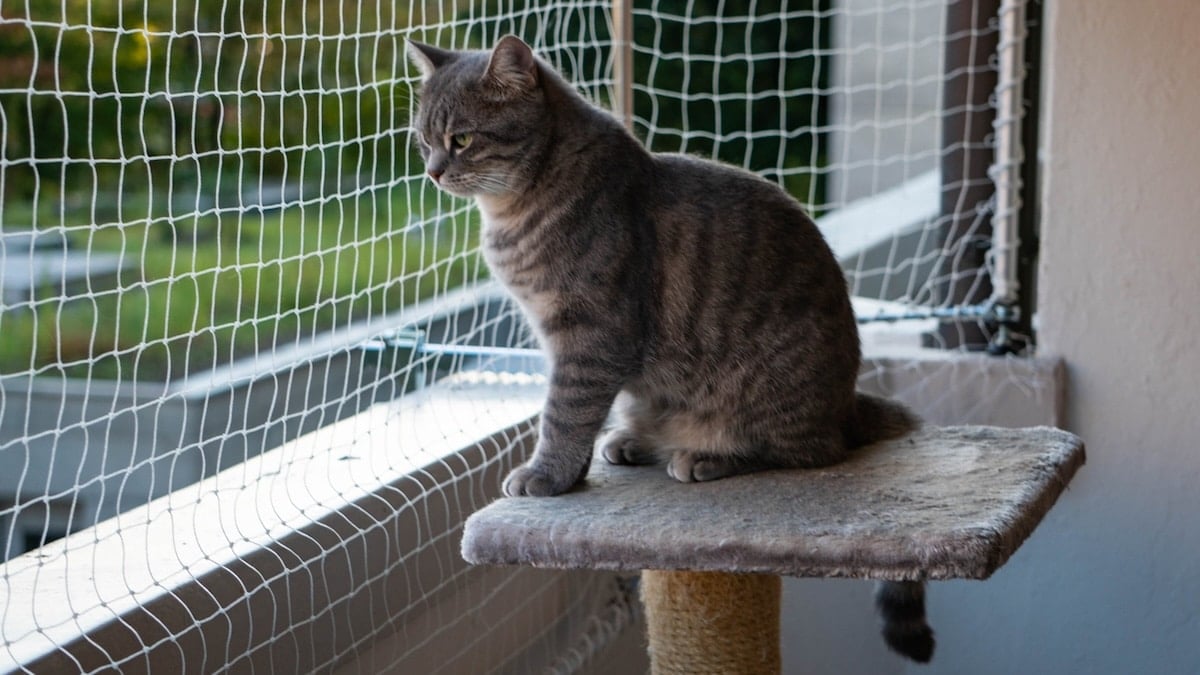
A catio is an outdoor cat house built with mesh or other materials, allowing your cat to enjoy fresh air while safely enclosed. Catios can be permanent structures, but there are also smaller, portable catios and cat tents that allow cat parents to gauge their pet’s interest before fully committing to the real deal.
4. Tracking devices
If you have a kitty that you trust to stay close to home and decide to let them roam outdoors, you might want to consider a GPS collar or tracking device for peace of mind. That way, if your cat doesn’t come back at their appointed time, you’ll be better able to find them in a pinch.
Takeaways
Ultimately, deciding whether to let your cat have access to the outdoors is a personal choice that depends a lot on your tolerance for risk, as well as on the environment you live in. Whatever choice you make, providing enrichment, safety measures, and supervision will help ensure your cat stays as healthy and happy as possible.